




Cappadocia Private Tour
✓ What's Included
- + Private transportation
- + Bottled water
- + All Fees and Taxes
- + Air-conditioned vehicle
- + rehber
✗ What's Not Included
- - Alcoholic Beverages
- - tips
- - Lunch
📍 Itinerary
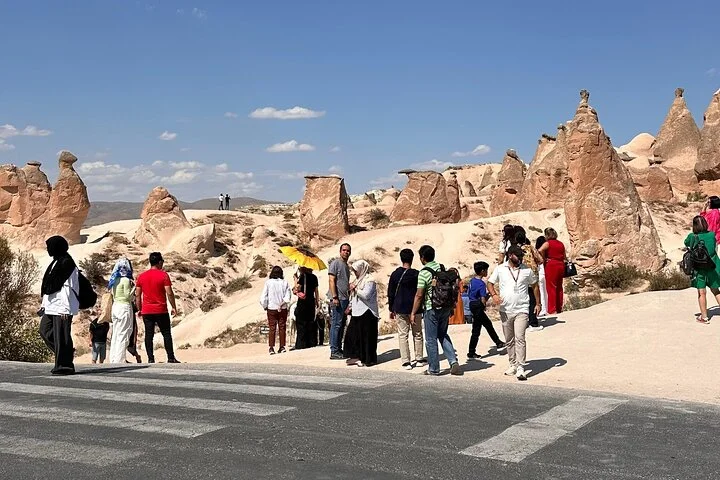
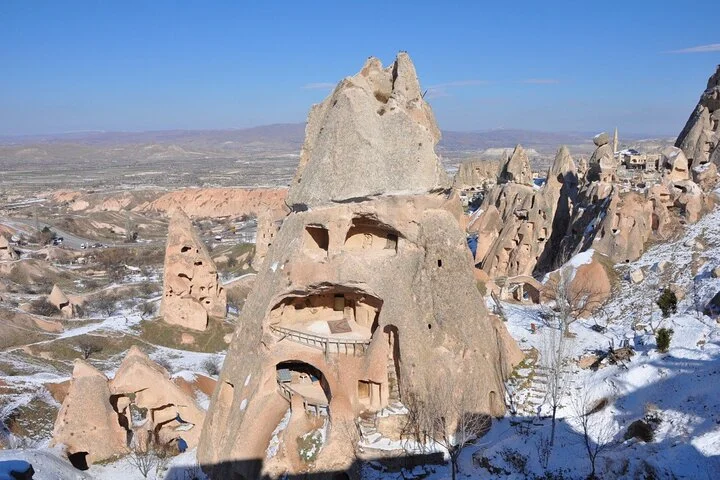
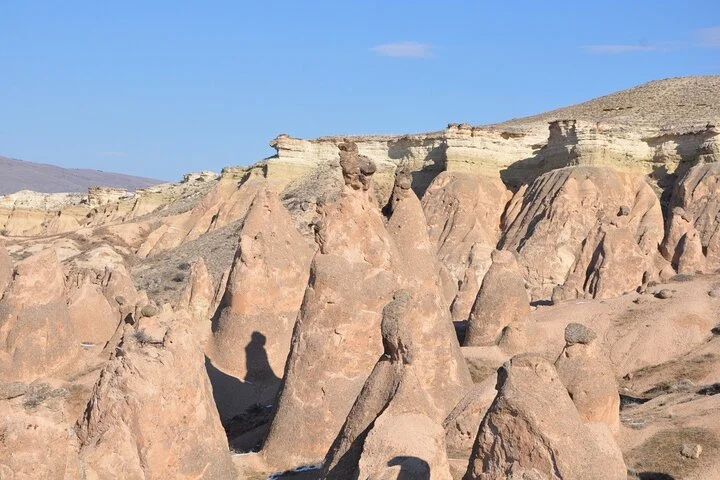
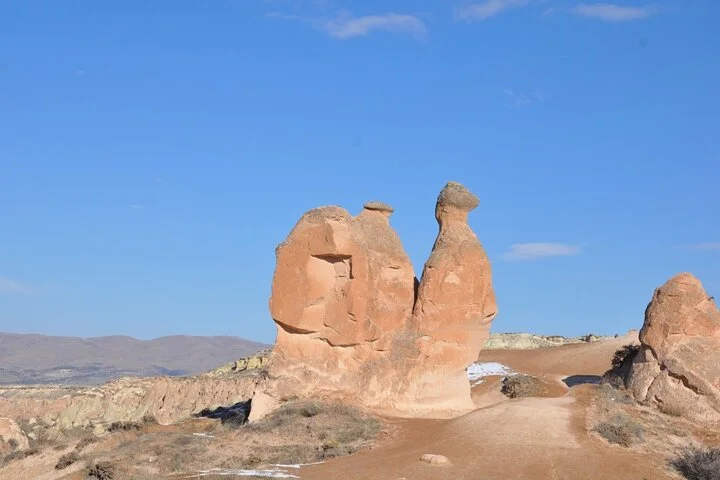
About 50 million years ago, the Cappadocia region was an inland sea. This sea dried up due to the high temperature in the region as the surrounding volcanoes became active. Lava erupting from volcanoes filled the place of the sea, just like filling a huge bowl. Over millions of years, streams have eroded the soft rock formed by the cooling of lava, creating deep valleys. Strong winds gave the fairy chimneys their current shape. The rock structure and wind reception angle of each valley in the region are different from each other. For this reason, the formation of fairy chimneys in the valleys also varies. In this sense, Devrent Valley is a special valley where many different fairy chimney formations can be observed. This difference is so special that it is also known as the Imaginary Valley because the shapes of the fairy chimneys resemble some living creatures.
⏲ 60 minThe tradition of ceramic making in the district, which has many pottery workshops, has been continuing since the Hittites. Ceramic clay obtained from the red soil and silt brought by Kızılırmak is shaped by the hands of ceramic artists from Avanos.
⏲ 1 minThe history of the Valley of Love dates back at least to Roman times. There is a legend that once two dynasties lived in the same village. A fight broke out between the two dynasties, resulting in the virtual division of the village. One day, two villagers complained about the situation that resulted in two men from opposing sides being drafted into the army. The two drafted soldiers fell in love as soon as they saw each other. Knowing this, the quarreling villagers did their best to separate the two, but they failed. The villagers, who had difficulty separating the couple, decided to get them married. Time passed and the couple had a child, but the situation was not enough to reconcile the opposing families. Finally, they killed the child. The girl could not bear the death of her husband and later committed suicide. It is said that after the deaths of the two lovers, God rained down stones to punish the quarreling villagers.
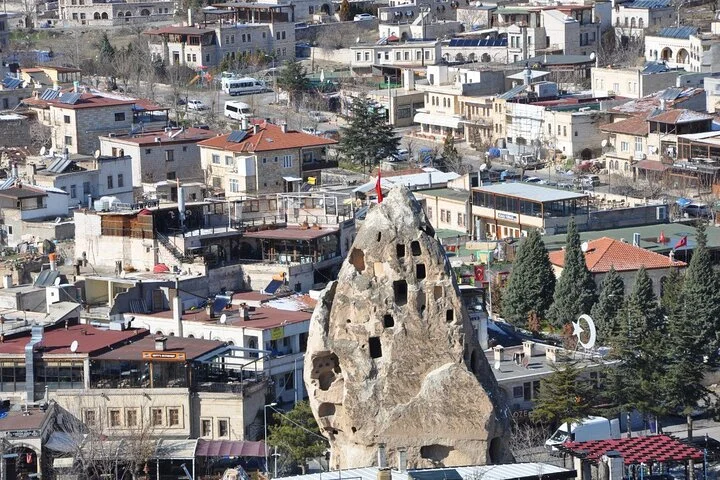
⏲ 60 minIt dates back to the Roman and Byzantine periods, but in some research articles, the construction date for the use of the castle is BC. It is thought that it may have been carried out between the 4th and 1st centuries. The period in which the castle, which has survived from ancient times to the present day, was used most intensively was A.D. It is thought that it was used by Christian monks in the mid-17th century and was used for defensive purposes from the later period until today.
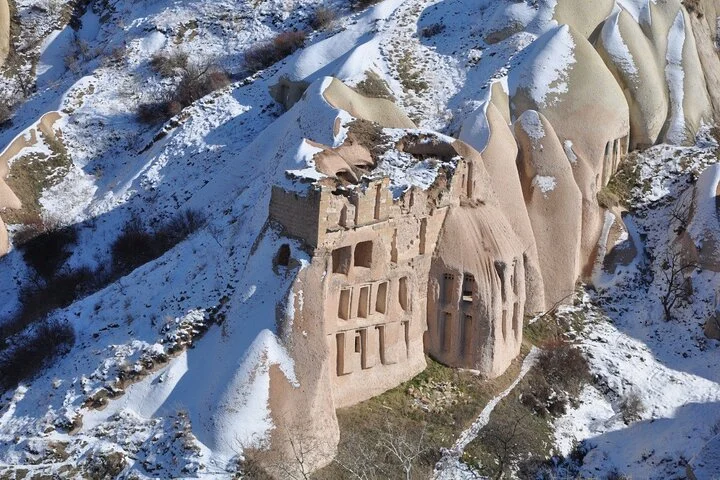
⏲ 60 minPigeon Valley, one of the most beautiful places in Cappadocia, has been welcoming all its guests for years with its fascinating view and the famous sunset witnessed from Uçhisar Castle. This wide valley between Uçhisar and Göreme takes its name from pigeons. Rumor has it that pigeon breeding started in the 9th century and attracted the attention of the people living here that pigeon manure is very useful in grape growing. For this reason, the rock-carved nests that still stand out today were formed when agricultural workers chose the valley instead of houses to increase their productivity.
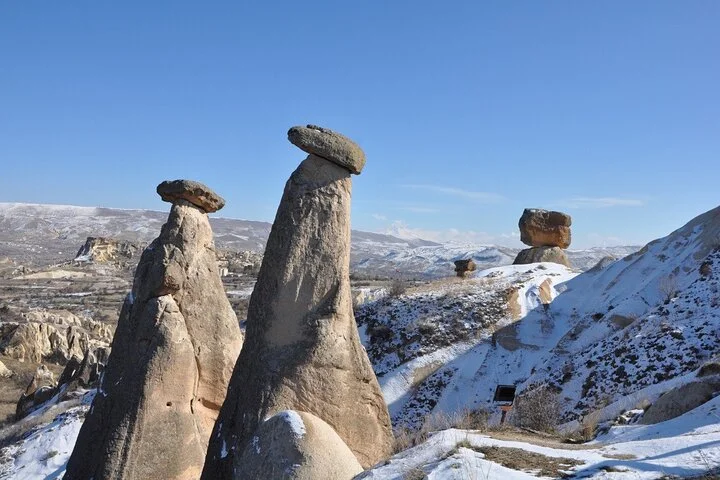
⏲ 30 minFairy chimneys (Three Beauties), one of the important symbols of Cappadocia, are believed to represent the shepherd in the front, the child in the middle, and the princess in the back. It is believed that the Three Beauties, which are thought to symbolize the family in the Baye, go up and down the slope next to these fairy chimneys 7 times so that childless families will come here and have children.
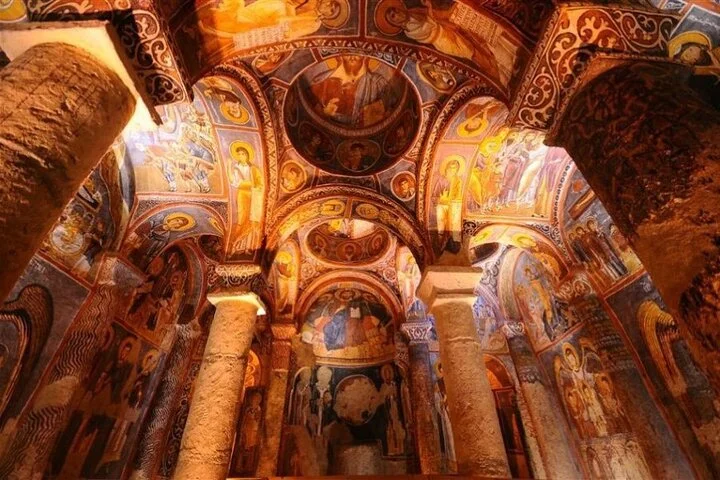
⏲ 30 minMonk's Valley distinguishes itself with fairy chimneys that have multiple caps or heads, and it's historically significant for housing monks in the past. The valley got its name from the monks who sought solitude and a place for prayer within these natural structures. Some of the fairy chimneys in the valley were carved into monasteries, chapels, and living quarters by these monks, making it an important site for historical and religious studies. Both Paşabağ (Monk's Valley) and other regions within Cappadocia, like Göreme, Avanos, and Ürgüp, offer a rich exploration experience of unique geological formations, historical cave churches, and underground cities. Cappadocia's landscape is a testament to both natural processes and human endeavor, making it a fascinating destination for tourists from around the world.
⏲ 60 minⓘ Additional Information
- • Infants and small children can ride in a pram or stroller
- • Service animals allowed
- • Public transportation options are available nearby
- • Specialized infant seats are available
- • Travelers should have at least a moderate level of physical fitness
📅 Cancellation Policy
STANDARD
For a full refund, cancel at least 24 hours before the scheduled departure time.
🚚 Meeting & Pickup
Pickup: PICKUP EVERYONE
Cappadocia Private Tour