Rechercher un tour ou un hôtel
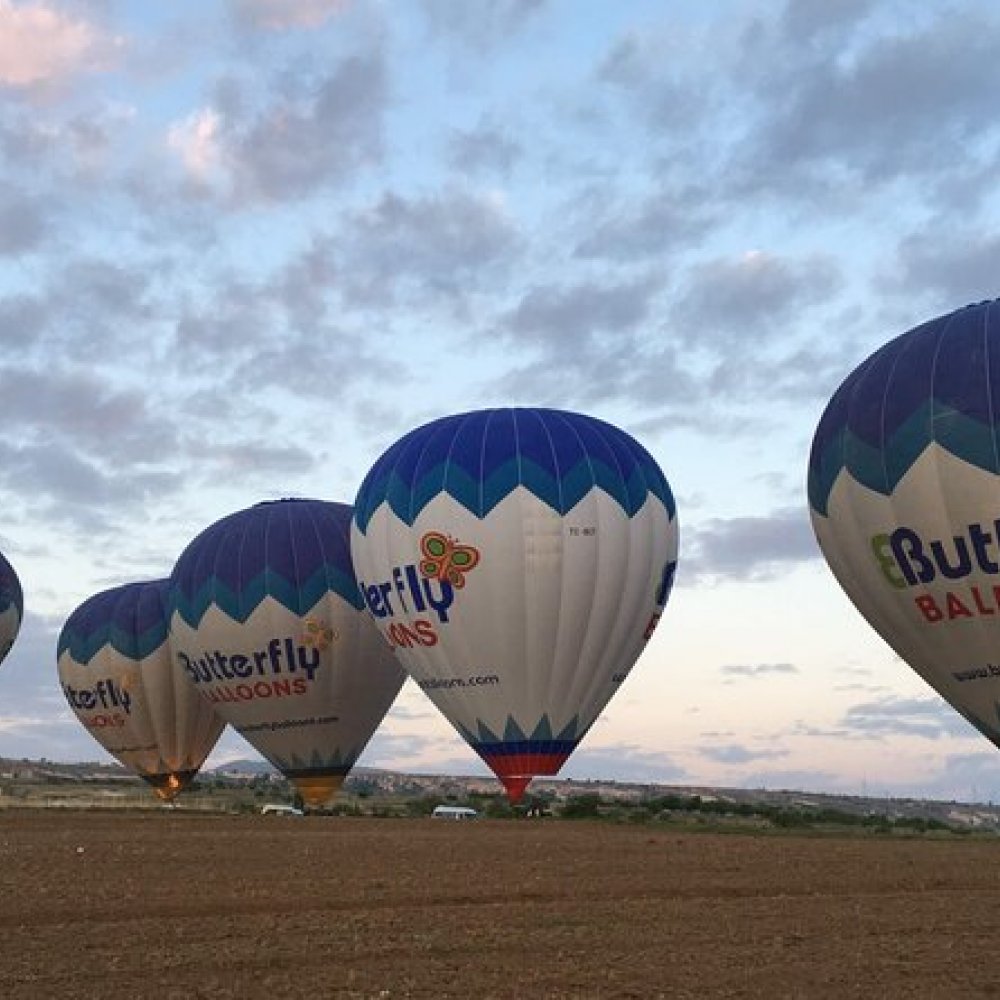
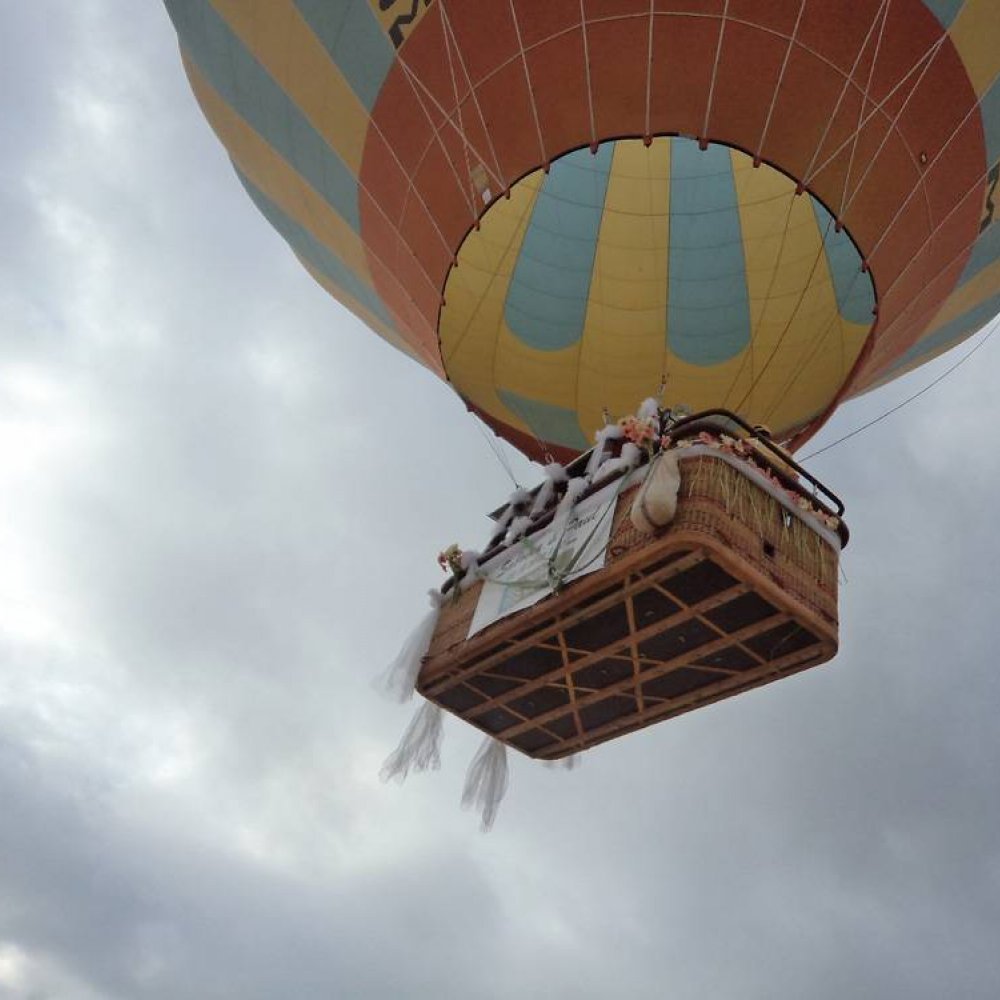
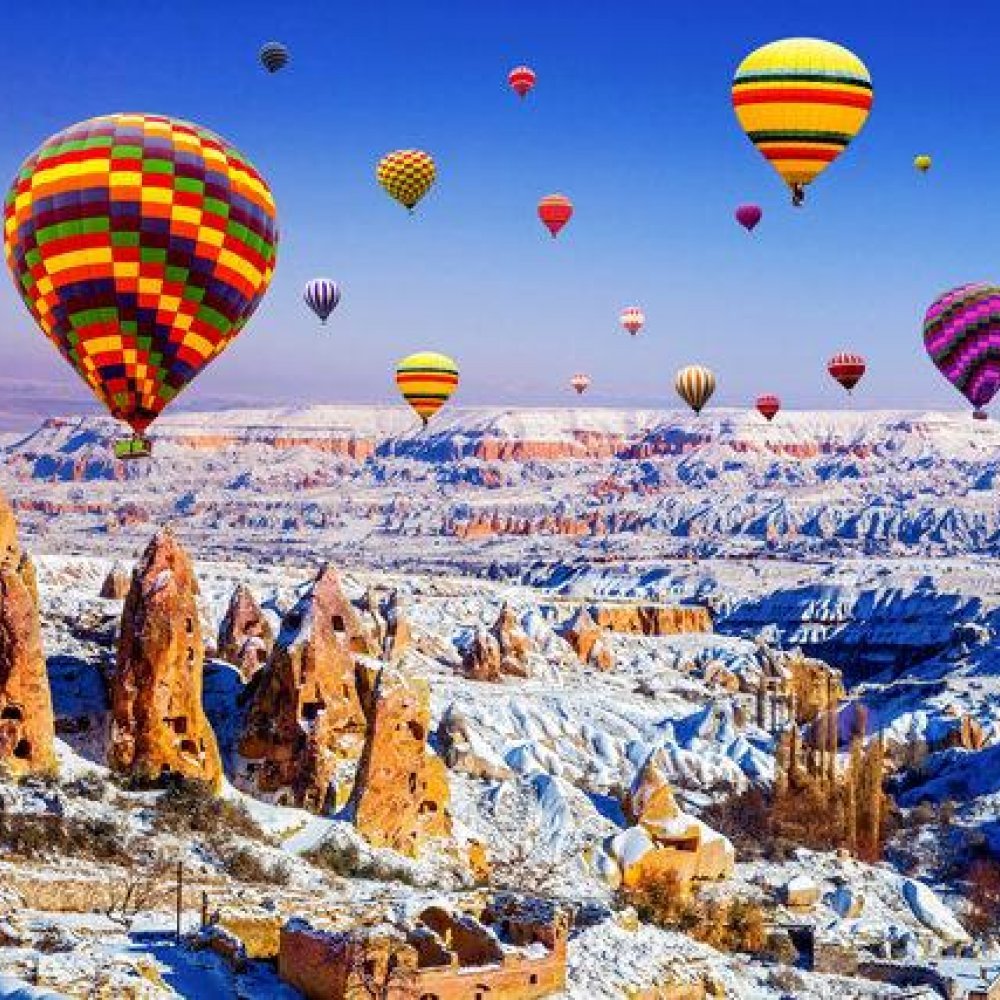
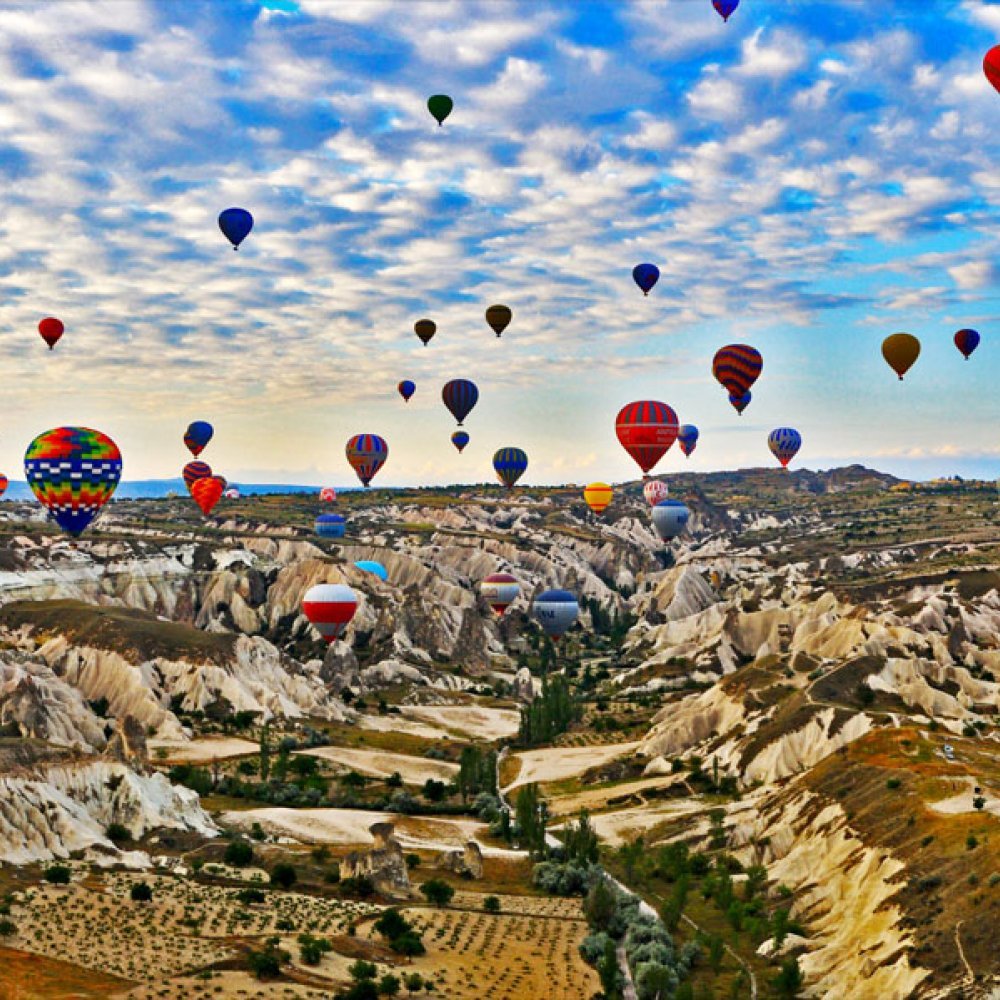
Vol en montgolfière en Cappadoce au-dessus des cheminées de fées
-
Se renseignerToutes les réservations
-
Assistance 7/24Appelez-nous à tout moment
-
SécuriséRéservation sécurisée
-
Offres spécialesOffres jusqu'à 40 %
TOUR EN MONTGOLFIÈRE
- Transfert gratuit
- Prise en charge et retour à l'hôtel dans la région de Cappadoce
- Durée du vol en montgolfière : 1 heure dans les airs
- durée de l'activité 3 heures
- L'assurance vol en nacelle est incluse dans le prix
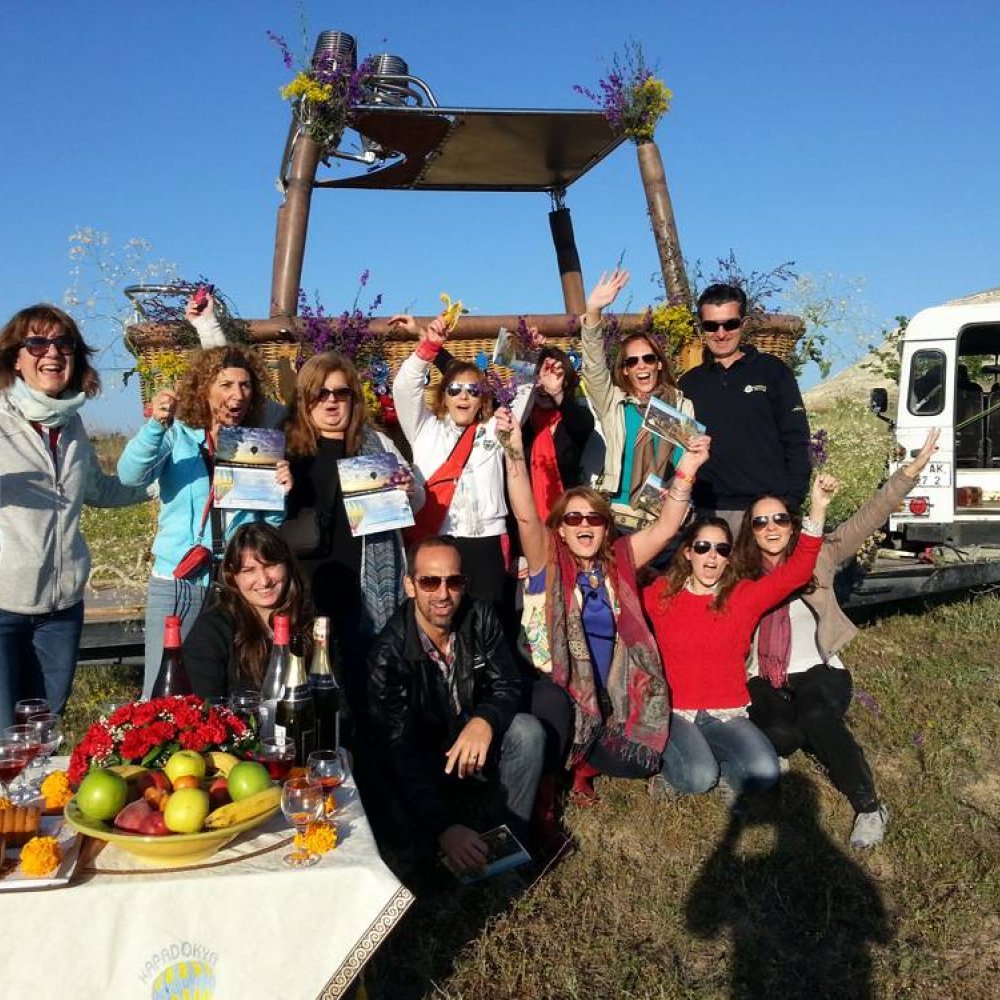
- Célébration de fin de vol : champagne sans alcool, jus de fruits, gâteau
- Votre pilote vous remettra un certificat de vol
- Heure de prise en charge / de retour : le matin, 4:30 - 7:30. 1 jour avant le jour du vol, nous vous communiquons l'heure de prise en charge à votre hôtel selon son emplacement.
- Les enfants à partir de 6 ans peuvent voler
- Processus de réservation : après le prépaiement, votre place sera confirmée.
- Remarque : les vols dépendent des conditions météorologiques, ont lieu une fois par jour et au lever du soleil
- Les vols en montgolfière ont lieu tous les jours lorsque la météo le permet, au lever du soleil (lorsque les conditions météorologiques sont favorables). (Ils sont rarement effectués en milieu de journée, surtout en hiver)
- Les prix s'entendent par personne. Les tarifs de la nacelle sont standards ; le prix ne change pas pour les étudiants et les enfants.
- Les enfants de moins de 6 ans ne peuvent pas participer au vol en montgolfière.
Vol en montgolfière en Cappadoce au-dessus des cheminées de fées
La Cappadoce, le meilleur endroit au monde pour un vol en montgolfière, se trouve en Anatolie centrale. La région possède son propre patrimoine historique et culturel. Lors de notre voyage en Cappadoce, nous avons visité de nombreuses cités autrefois habitées par des chrétiens qui avaient fui les persécutions romaines au 4e siècle apr. J.-C. Ces cités souterraines sont appelées « églises rupestres de Cappadoce ».
Les belles vallées de Cappadoce, en Anatolie centrale, se situent entre 1050 et 1300 mètres d'altitude.
You will find the beautiful valleys of Cappadocia in Central Anatolia, which vary from 1050 to 1300 meters above sea level. The weather is temperate with hot summers and somewhat mild winters. There are around 250 people living in the area, many of them farmers or shepherds who still use their traditional methods for harvesting wheat and barley by hand in order to keep their identity as an indigenous community. The landscape is mostly made up of soft hills, but there are also some flat areas where you can see old abandoned houses called "cave dwellings", carved into rocks by people thousands of years ago. The local fauna includes foxes and jackals that live in holes that were once inhabited by humans as well as wild boars that roam freely through these ancient lands
La Cappadoce est une région unique et spectaculaire de la Turquie, riche en sites fascinants et en patrimoine culturel.
La Cappadoce est une région unique et spectaculaire de la Turquie, riche en sites fascinants et en patrimoine culturel.
C'est une région ancienne d'Anatolie centrale, surtout connue pour ses formations géologiques insolites appelées cheminées de fées et pour ses villes souterraines. La région compte aussi de nombreuses églises, monastères et habitations troglodytes creusés dans la roche tendre des collines par les premiers chrétiens pour se cacher des persécutions sous l'Empire romain.
Le tour en montgolfière vous fera survoler ces paysages extraordinaires, avec plusieurs arrêts photo en chemin ! C'est vraiment une expérience unique dans une vie à ne pas manquer !
On peut observer que le paysage de la Cappadoce a été façonné par Mère Nature au fil de nombreuses éruptions.
Cappadocia is a region in central Turkey where one can observe that the landscape of Cappadocia with the help of Mother Nature has been created through many eruptions. Volcanic eruptions, erosion caused by wind, rain and soil erosion as well as sedimentation have changed this unique landscape into what we see today. Wind erosion is a weathering process that occurs when particles within an air flow collide with solid surfaces like rocks or soil particles at high speeds causing them to erode away gradually over time if there are no barriers present that would prevent this from happening in certain areas such as sand dunes - which will build up but eventually be blown away too!
Rainwater can also cause erosion due to its ability to wash away loose material such as sand grains while ice melts during warm seasons leaving behind exposed bedrock underneath so there will always be some type of natural forces at play which shape any given environment according to their own criteria when left alone long enough without interference from humans or other living creatures (except maybe insects!).
À l'origine, la région était appelée « Katpatuka » par les Hittites, ce qui signifie « le pays des beaux chevaux ».
Les Hittites appelaient la région « Katpatuka », ce qui signifie « le pays des beaux chevaux ».
C'est une région unique et spectaculaire de la Turquie, riche en sites fascinants et en patrimoine culturel.
La première mention de la Cappadoce se trouve dans une lettre du roi hittite Muwatalli II au roi Tudhaliya III (Suppiluliuma II).
La première mention de la Cappadoce se trouve dans une lettre du roi hittite Muwatalli II à
Le roi Tudhaliya III (Suppiluliuma II). Dans cette lettre, Muwatalli décrit le climat et les ressources naturelles du pays.
Dans les inscriptions perso-araméennes, le nom « Katpatuka » apparaissait sous la forme « Kapudukaya ».
Dans les inscriptions perso-araméennes, le nom "Katpatuka" apparaissait sous la forme "Kapudukaya". Le mot Kappadokian vient du mot grec Kappadokia, qui signifie « Pays des beaux chevaux ».
On raconte que le nom viendrait d'une légende au sujet d'un homme nommé Kappadokos qui vivait ici et avait deux filles ailées. Elles volaient alentour et chantaient merveilleusement, comme des anges. Dans certaines versions de cette légende, il s'agissait de fées ou d'esprits qui aidaient les personnes dans le besoin ; d'autres versions affirment qu'elles étaient des sorcières qui apportaient maladie et mort autour d'elles.
Selon certaines théories, le nom dériverait de ce mot.
Selon certaines théories, le nom proviendrait de ce mot. Ce nom est utilisé depuis l'époque de l'Empire ottoman. Selon certaines théories, le nom proviendrait de ce mot. Ce nom est utilisé depuis l'époque de l'Empire ottoman.
Certains géographes pensent que « Kapadokya » signifie « la terre au-dessus de la terre », tandis que d'autres pensent qu'il signifie « la terre au-delà des monts Taurus ».
Some geographers believe that “Kapadokya” is derived from “the land above earth”, while others believe that it is derived from “the land beyond the Taurus Mountains”. During the first centuries AD, this area was ruled by the Hittite Empire. In 676 BC, Kapadokya was conquered by the Lydian king Sadyattes. Later on, after Alexander III's conquest of Asia Minor and Pamphylia in 334 BC, Cappadocia became part of Europe's Hellenistic empire. In 42 BC, Herodotus stated that all horses born in this region were trained at birth to move backwards to make use of a type of reverse gear when moving uphill on hillsides with an incline steeper than 30 degrees (i.e., a standard gradient for trolley cars). The claim has been dismissed by modern researchers as false because no such evidence exists; however some still think that it may be possible based on anecdotal evidence from travelers who have visited this region's villages--which often overlooked such attempts due to their lacklustre nature compared with other more interesting sights found elsewhere throughout Turkey's Anatolian region."
Les premiers chrétiens arrivés en Cappadoce ont découvert des montagnes et des roches volcaniques qui offraient une excellente protection contre leurs ennemis.
The first Christians who arrived in Cappadocia found out that there were volcanic mountains and rocks providing great protection against their enemies. They occupied these areas, while they were being persecuted by the Romans. These Christians were forced to live in caves because they had no other place to go, but they survived by eating wild plants and animals. These Christians made their homes underground so that their enemies could not find them easily. There are many underground cities in Cappadocia today; some of them have been destroyed but others are still standing strong after thousands of years!
Ils commencèrent à creuser des villes souterraines et à s'y cacher pour se protéger.
The underground cities were used for many purposes. They were built to protect the people from their enemies, as well as churches and storage areas. These subterranean structures served as homes for the people living there, but they also had other uses too. Some people would use them to hide when there was danger outside of their city and others would stay in them while they were sleeping or resting during the day.
Un vol en montgolfière peut être une expérience inoubliable dans votre vie.
Survolez en montgolfière les cheminées de fées de Cappadoce, en Turquie. Une expérience inoubliable dans une vie.
- Admirez le paysage sous un angle différent.
- Séjournez dans un hôtel avec vue sur les cheminées de fées et les autres merveilles de la Cappadoce, en Turquie.
- Goûtez la cuisine locale et achetez des souvenirs.
- Visitez des sites historiques comme les villes souterraines et les églises creusées dans la roche par les premiers chrétiens pour échapper aux persécutions romaines à l'époque romaine !
Vol en montgolfière en Cappadoce au-dessus des cheminées de fées
Si vous voulez vivre le meilleur vol en montgolfière de Cappadoce, contactez-nous !
-
 Amazing experience! Flight was delayed for an hour but tour managed to coordinate with my airport transfer for a seamless experience!
-
 Good experience but they didn’t fly over city and moreover they took off after sun rise so it diluted our experience. We were expecting to see the sun rise from balloon and wish to watch Pre sunrise and post sun rise view from Balloon. So overall ok ok experience.
-
 It was great experience with hot air balloon tour. Nice hospitality and very well managed
-
 Everything was timely and perfect. The flight was excellent. I will definitely recommend my friends.
-
 The balloon ride was smooth, view awesome and great experience. The ride was worth every penny.
-
The team was awesome. Pick up was good and the ride itself was amazing! Would recommend
-
Our ride got cancelled due to bad weather. The team is very responsive.
-
 Superbe expérience, voir plus de 200 montgolfières voler
-
Une expérience fantastique ! Nous sommes très satisfaits.
-
 C'était une belle activité. Prix abordable.
-
 Ce fut une bonne expérience. Le personnel était souriant.
-
 Bien organisé. Le guide était compétent.
-
 Une expérience fantastique ! Nous sommes très satisfaits.
-
 Parfait ! Tout était vraiment super.